
It’s common for the nasal tip to look different as your nose heals after rhinoplasty. In some patients, the tip may appear slightly lower as swelling resolves and the tissues settle. This expected change is different from true postoperative tip drooping caused by inadequate or weakened structural support. Your surgeon can determine whether the change you’re seeing is part of normal healing or something that should be evaluated more closely. Many patients ask whether their nose tip will drop after rhinoplasty and how much change is considered normal during healing.

Key Takeaways
- A nasal tip may look slightly lower as swelling decreases, but normal settling is different from true structural drooping.
- The most noticeable changes often occur during the first several months, while tip refinement can continue for a year or longer.
- Progressive drooping, loss of projection, nasal obstruction, or structural collapse should be evaluated by your surgeon.
Tip Settling vs. True Tip Drooping After Rhinoplasty
Patients often use “tip drop” to describe any downward change in the appearance of the nasal tip after rhinoplasty. However, a tip that looks lower as swelling subsides is not necessarily the same as true loss of tip rotation or projection. A peer-reviewed study notes that true postoperative tip drooping can result from disruption of nasal tip support. Normal healing changes should be distinguished from structural drooping that persists or progresses.
The nasal tip is often one of the last areas to fully refine after rhinoplasty. Persistent swelling, scar maturation, skin thickness, and changes in the underlying nasal framework can all influence how the tip looks during recovery.
A small change in the apparent position of the tip can occur as the nose settles. Persistent or progressive downward rotation, loss of projection, nasal obstruction, or a substantial change from the expected surgical result should be evaluated by your surgeon.
Healing Timeline for the Nasal Tip After Rhinoplasty Surgery
When Does Tip Drop After Rhinoplasty Occur?
Some of the most noticeable changes occur during the first months, as postoperative swelling decreases. The nasal tip may appear more elevated or swollen and then look lower or less projected as the nose settles. However, the timing varies by anatomy, skin thickness, surgical technique, and the amount of postoperative swelling. Subtle refinement can continue for a year or longer.
The American Society of Plastic Surgeons notes that while initial swelling typically subsides within several weeks, it can take up to a year for the nasal contour to fully refine.
What You Might See During the First Month
In the first few weeks after a nose job, swelling dominates the nasal appearance. The tip is often swollen and may initially appear more elevated or rotated because of postoperative swelling, surgical manipulation, and, when applicable, techniques used to position or support the nasal tip.
During this period, the nose tip can feel firm, even numb, and appear more projected than expected. This can be normal during early healing and does not necessarily reflect your final rhinoplasty result.
Key expectations during this phase include:
- A more elevated or rotated nose tip
- Noticeable swelling, especially in the lower third of the nose
- Bruising and changes in skin sensation
- Temporary congestion or a feeling of internal pressure
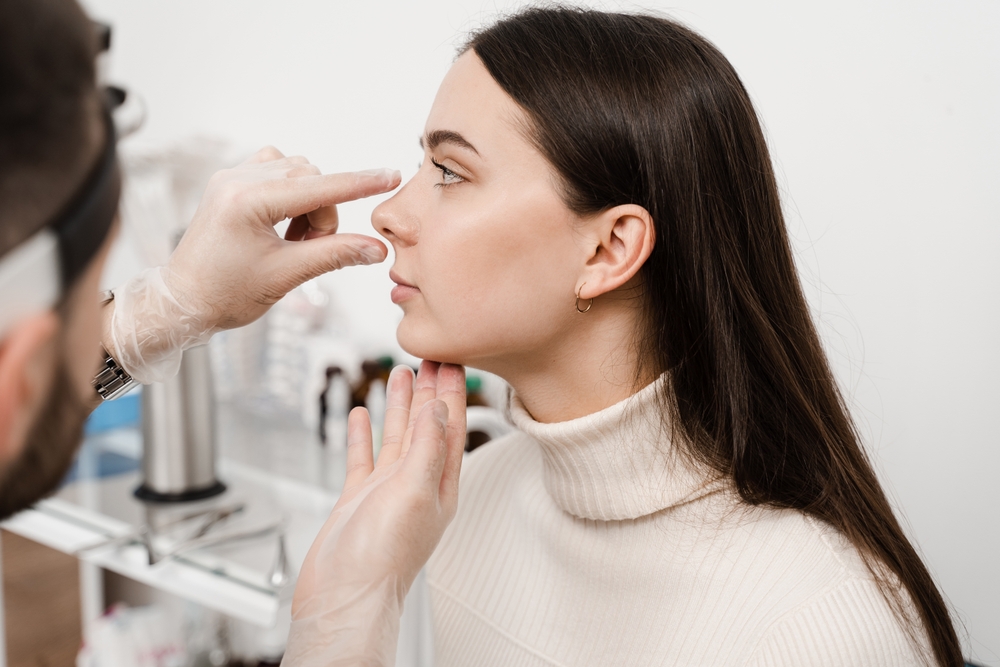
Changes Around the Three-Month Mark
During the first few months, a substantial amount of postoperative swelling typically decreases. As this occurs, the tip may look rounder, softer, or slightly lower. This is often when patients first notice what seems like a nose tip drop after rhinoplasty, even though the change may reflect resolving swelling rather than structural drooping.
During this time, patients may see:
- Some improvement in nasal airflow as internal swelling decreases
- Shifts in tip rotation or projection
- Changes in definition along the nasolabial angle
How Much Does the Nose Tip Drop After Rhinoplasty?
There is no single amount of tip settling that is considered normal for every rhinoplasty patient. The degree of change depends on factors such as anatomy, skin thickness, cartilage strength, surgical technique, and the original tip position. Rather than focusing on a specific measurement, surgeons look at whether the tip is settling in a way that is consistent with the planned result.
How the Tip Settles Between Six Months and One Year
Between six months and one year, the nasal tip typically becomes more refined as swelling continues to decrease and the underlying structural framework stabilizes. Patients may notice smoother transitions from the bridge to the tip, improved definition, and greater stability in tip position, rotation, and projection.
Final rhinoplasty results are often evaluated around the one-year mark, although subtle refinement may continue beyond that in some patients. If the tip remains significantly drooped, loses projection, appears structurally collapsed, or causes nasal obstruction after adequate healing, your surgeon may discuss whether further evaluation or revision rhinoplasty is appropriate.
Before & After Photos
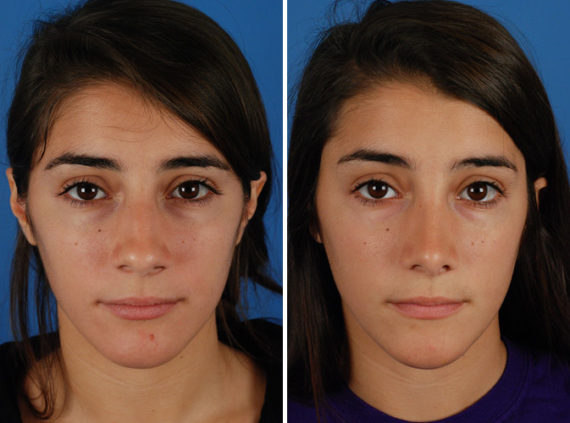
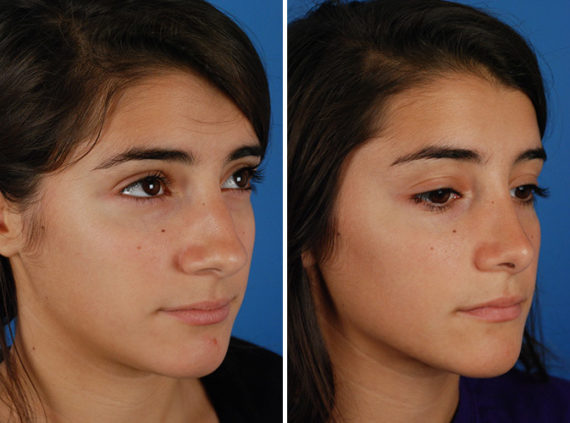
* Each patient is unique and individual results may vary.
Why the Nose Tip Can Look Lower During Rhinoplasty Healing
Several factors can affect the apparent position of the nasal tip during recovery, including residual swelling, skin thickness, scar maturation, and the underlying cartilage framework.
Why Is My Nose Tip Still Swollen After Rhinoplasty?
Swelling is not distributed evenly throughout the nose. The nasal tip often retains fluid longer because of its dense soft tissue and limited lymphatic drainage, which can temporarily make it look larger or lower.
With open rhinoplasty, disruption of normal lymphatic drainage can also contribute to persistent tip swelling and generally improves with healing.
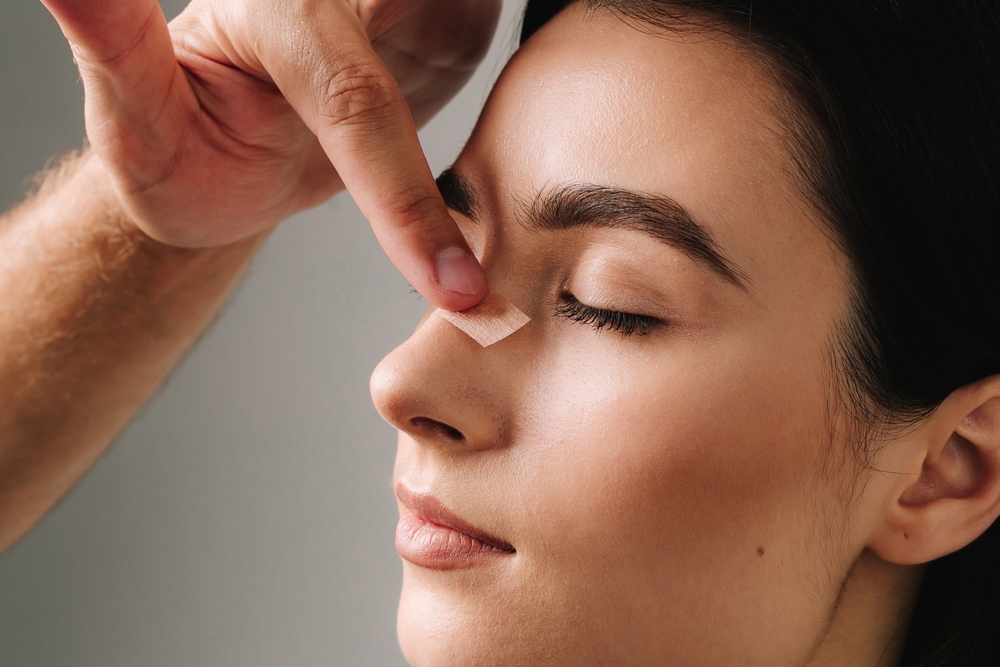
Your surgeon may recommend taping or other measures to manage swelling in selected cases. Cool compresses may also be used early in recovery but should generally be placed around the cheeks or under the eyes rather than directly on the healing nose.
How Cartilage, Tissue, and Healing Affect Tip Position
The nasal tip is supported by cartilage structures that are reshaped during rhinoplasty using techniques such as suturing, trimming, grafting, or repositioning. As these structures heal, the skin and soft tissue gradually adapt to the new framework. Skin thickness, swelling, and scar maturation can all influence how defined, firm, or elevated the tip appears during recovery.
Tip position can continue evolving for several months as swelling resolves and scar tissue matures. Persistent or excessive downward rotation may be influenced by factors such as weak cartilage support, over-resection, loss of projection from scarring or graft absorption, skin thickness and elasticity, or downward tension from scar tissue.
How Surgeons Help Prevent Tip Drooping After Rhinoplasty
Preventing excessive postoperative tip drooping primarily depends on establishing and preserving adequate nasal tip support during surgery. Depending on the patient’s anatomy and surgical goals, surgeons may use suturing techniques, cartilage grafts, or other structural maneuvers to control tip projection and rotation.
A review of nasal tip support techniques describes structural approaches such as columellar strut grafts, septal extension grafts, and tongue-in-groove techniques as established methods surgeons may use to support and control the nasal tip.
What If My Tip Dropped Too Much After Rhinoplasty?
A tip that looks slightly lower during healing does not necessarily indicate a problem. However, progressive downward rotation, noticeable loss of projection, a pinched or collapsed appearance, or worsening nasal airflow should be evaluated by your surgeon.

Are You Ready For A Consultation?
You are about to take the first steps towards improving your appearance and enhancing your self-image by learning about contemporary plastic surgery.
When Tip Changes Are Normal and When to Call Your Surgeon
Some variation in nasal tip position, definition, or symmetry can occur during healing.
Signs That Are Part of a Normal Healing Process
- The tip appears slightly lower or more defined as swelling decreases
- Mild asymmetry is present without affecting nasal function
- The tip gradually stabilizes in appearance
- No breathing difficulty or nasal obstruction is present
These changes often improve or stabilize as healing progresses and can be monitored during routine postoperative visits.
Signs You Should Contact Your Surgeon
- Sudden or progressive drooping after the initial recovery period
- A noticeably pinched, uneven, or collapsed tip
- Difficulty breathing or nasal airflow obstruction
- Significant differences between expected and actual results after one year
- New changes in nostril shape, tip symmetry, columellar position, or the angle between the nose and upper lip
A follow-up evaluation can help determine whether continued healing is appropriate or whether additional treatment should be considered.
Book a Consultation at Aesthetic Surgery Center
If you’re concerned about changes in your nasal tip after rhinoplasty, an in-person evaluation can help determine whether you’re seeing normal healing or a change that requires closer attention. Contact Aesthetic Surgery Center in Naples to schedule a rhinoplasty consultation today.
Frequently Asked Questions About Rhinoplasty Tip Drop
Not always. The nasal tip may look lower temporarily as swelling resolves and tissues settle, while true structural drooping may persist if tip support has weakened. Persistent concerns should be evaluated by your surgeon after an appropriate healing period.
The most noticeable changes usually occur during the first several months as swelling decreases. The nasal tip can continue refining for about a year or longer, particularly in patients with thicker skin, revision surgery, or extensive tip work.
Treatment depends on the cause. Selected contour irregularities may sometimes be camouflaged with injectable filler, but filler does not restore weakened structural support and carries rare but serious vascular risks. A surgeon experienced in rhinoplasty and nasal injectables should determine whether a nonsurgical option is appropriate.
The U.S. Food and Drug Administration warns that accidental injection of dermal filler into a blood vessel can cause serious complications, including tissue necrosis, vision abnormalities or blindness, and stroke.
Temporary asymmetry can occur because swelling may resolve unevenly and scar tissue continues to mature. Some asymmetry improves during healing, but persistent or increasing unevenness should be evaluated by your surgeon.
Week-to-week changes can occur during normal healing, especially in the first several months. The tip may look more swollen, lifted, droopy, or asymmetric at different stages without reflecting the final result. Contact your surgeon if a change is sudden, progressive, or accompanied by new breathing problems or other concerning symptoms.
Taping may help manage postoperative swelling in selected patients when recommended by their surgeon. It does not replace the structural support created during surgery and should only be used according to your surgical team’s instructions.

About the Author
Dr. Anurag Agarwal is a double board-certified facial plastic surgeon and the medical director of Aesthetic Surgery Center in Naples, FL. Certified by the American Board of Facial Plastic and Reconstructive Surgery and the American Board of Otolaryngology, Head and Neck Surgery, he is a Fellow of the American College of Surgeons, serves on the Board of Directors of the ABFPRS, and is a past president of the Florida Society of Facial Plastic and Reconstructive Surgery. He developed the Uplift™ lower face and neck lift and has been named a Castle Connolly Top Doctor every year since 2015, as well as Best Plastic Surgeon in the Naples Daily News Community’s Choice Awards in 2024 and 2025.