

Smoother Texture and Brighter Tone Without Surgery
Combining two treatments in a single appointment allows each one to support the other. The microneedling creates the pathway, and the platelet-rich plasma supplies the growth factors your skin uses to repair itself. Patients most often notice improvements in texture, fine lines, and overall tone.
Results vary from patient to patient, and your provider will talk through what is realistic for your skin during your consultation.
Our Achievements









What Is PRP with Microneedling?
Platelet-rich plasma, usually shortened to PRP, is a concentrated portion of your own blood that contains platelets and the growth factors those platelets release. It is prepared during your appointment from a small blood sample, so no donor material or manufactured product is involved.
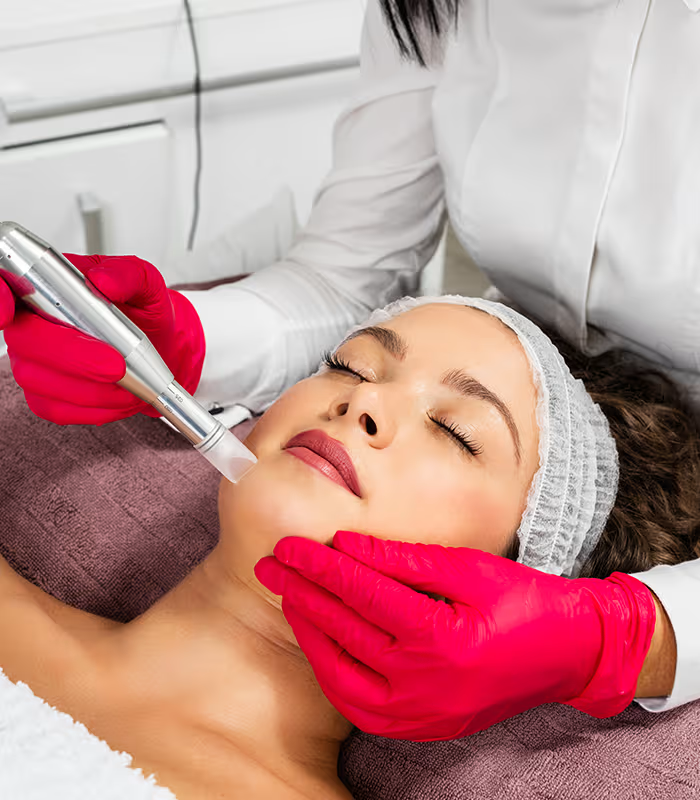
Microneedling is a treatment in which a handheld device passes over the skin and creates thousands of tiny, controlled channels in the surface. These microchannels are small enough to close quickly, yet significant enough to signal the skin to begin its natural repair sequence.
When the two are performed together, the PRP is applied to the skin immediately after microneedling, while the channels are still open. This timing allows the growth factors to reach the deeper layers of skin where collagen is produced, rather than sitting on the surface as most topical products do.
How Does PRP with Microneedling Work?
The microneedling portion of the treatment initiates a wound healing response. Your skin interprets the microchannels as an injury and responds by producing new collagen and elastin, the two proteins most responsible for firmness and elasticity. This is the same biological process behind the improvements seen with other resurfacing treatments, though microneedling accomplishes it without heat or ablation.
Platelet-rich plasma adds a second layer to that response. Activated platelets release a group of proteins that direct tissue repair, including transforming growth factor beta, platelet-derived growth factor, vascular endothelial growth factor, and hepatocyte growth factor. These growth factors help enhance and modulate the production of collagen and proteoglycans, the substances that give skin its structure and hydration.
Neither part of the treatment produces an immediate change in the way a filler does. The improvement comes from tissue your body builds over the following weeks and months.
The System We Use to Prepare Your PRP
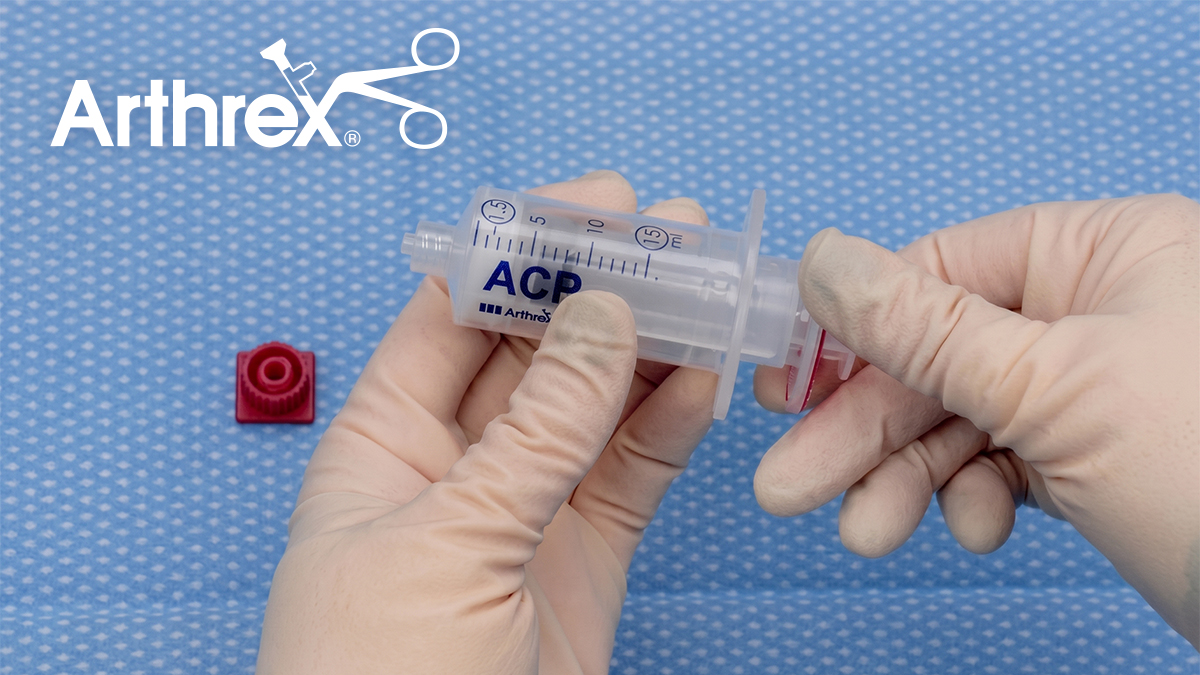
Preparing for a Successful Blood Draw With the Arthrex ACP® Double-Syringe System.
The quality of a PRP treatment depends heavily on how the plasma is prepared. Our Skin Spa uses the Arthrex ACP double-syringe system, a closed preparation system that has been in clinical use for more than fifteen years. Arthrex is based here in Naples, which makes this a local technology as well as a well-studied one.
The process is straightforward. About 15 mL of blood is drawn, roughly the volume of a tablespoon. The sample is placed in a centrifuge and spun for approximately five minutes, which separates the plasma and platelets from the red and white blood cells. The double-syringe design keeps the sample enclosed from the blood draw through to application, so the plasma is never exposed to open air.
Two characteristics of this system are worth noting. It concentrates platelets to approximately 2.3 times their baseline level in whole blood, and it reduces neutrophil concentration by 99.9 percent. Neutrophils are a type of white blood cell that releases degradative proteins, and published work indicates these proteins can have a detrimental effect on the healing process. Removing them leaves a preparation focused on the platelets and growth factors that support repair.
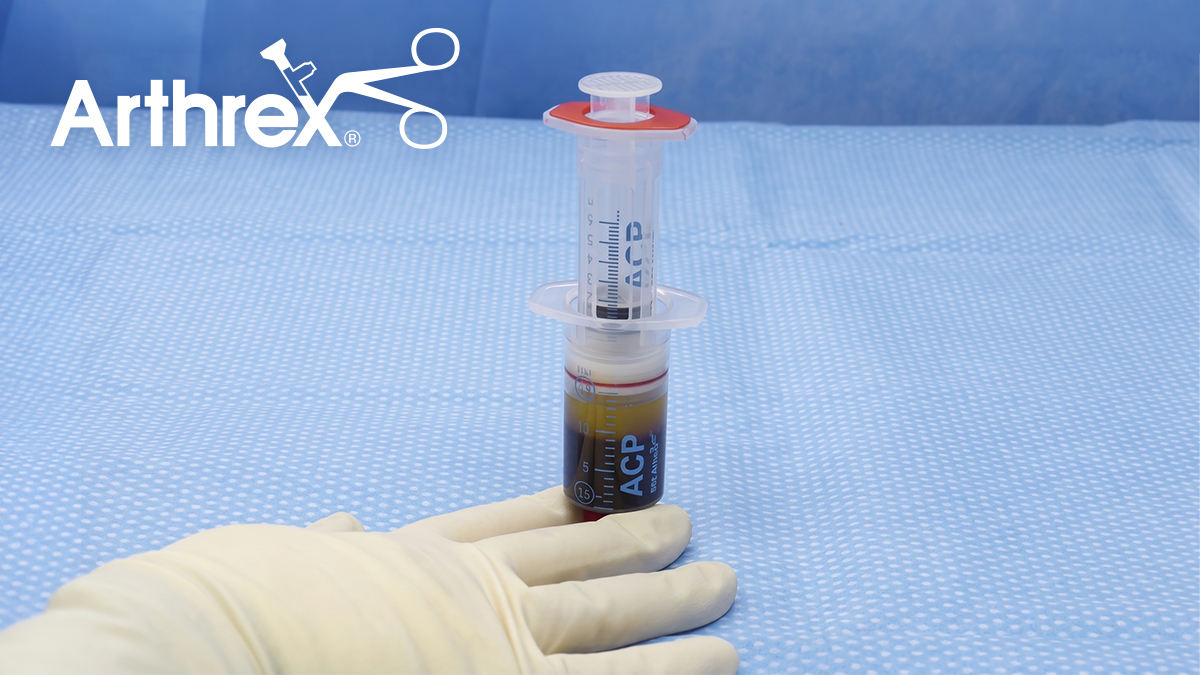
Arthrex ACP® Platelet-Rich Plasma (PRP) System: Centrifugation and PRP Separation.
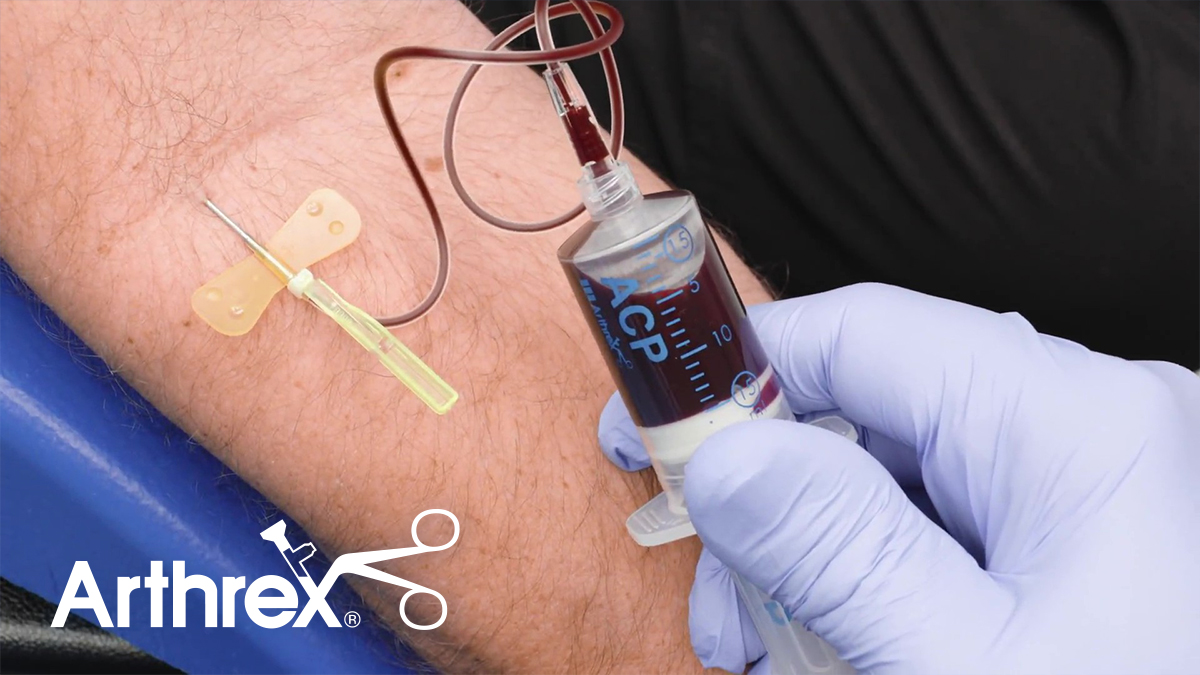
Executing a Successful Blood Draw.
-

- A.H.


4.8(52)

5(82)

4.9(72)

4.9(57)
Am I a Good Candidate for PRP with Microneedling?
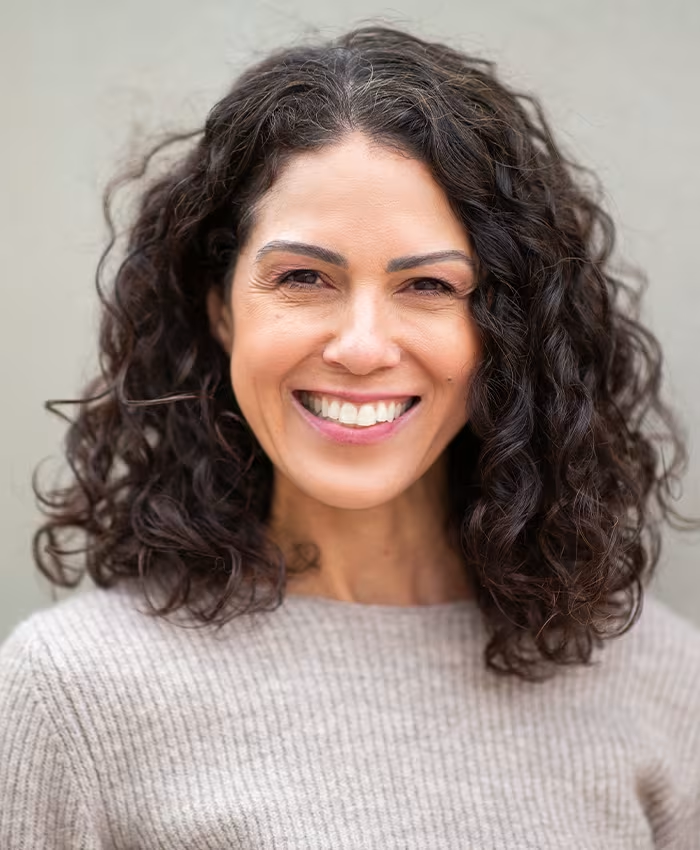
This treatment suits patients who want meaningful improvement in the quality of their skin without surgery or extended recovery. It tends to work well for those with:
- Fine lines and early wrinkles
- Acne scarring
- Uneven or rough skin texture
- Sun damage and uneven tone
- Mild skin laxity
- Enlarged pores
Good candidates are in appropriate overall health and hold realistic expectations about what a series of non-surgical treatments can accomplish. Patients with more advanced laxity or deeper volume loss may be better served by a surgical procedure or by combining this treatment with another option, and your provider will tell you honestly if that is the case.
Certain conditions make this treatment inadvisable, either temporarily or permanently. These include active acne breakouts in the treatment area, cold sores that have not yet resolved, active skin infection, and open wounds. Patients with bleeding disorders, severe platelet disorders, or uncontrolled diabetes are generally not candidates. A history of keloid scarring requires careful evaluation before proceeding. Your provider will also review your current medications, including any recent or ongoing use of isotretinoin or topical retinoids, along with pregnancy or breastfeeding status.
Your Consultation at the Skin Spa
Your consultation begins with a review of your medical history, your current skincare routine, and the concerns that brought you in. Your provider will examine your skin, discuss whether PRP with microneedling is the right approach, and explain what a full course of treatment would involve for you specifically.
The Skin Spa operates as part of Aesthetic Surgery Center under the direction of Dr. Anurag Agarwal, a double board-certified facial plastic surgeon and Medical Director of the practice. Treatments are performed by our nursing and licensed aesthetic staff, with physician oversight built into the protocol.
This is also the appointment to ask about cost, timing, and how this treatment might fit alongside anything else you are considering.
CALL TODAY TO SCHEDULE YOUR CONSULTATION
Preparing for Your Treatment
Preparation is simple, though following it carefully improves both comfort and results.
- Avoid excessive sun exposure in the days leading up to your appointment
- Follow the guidance you receive regarding medications and supplements that may increase bleeding risk, and never stop a prescribed medication without approval from the physician who prescribed it
- Arrive with clean skin and no makeup
- Let our staff know about any recent cosmetic treatments, including fillers, peels, or laser work
- Report any illness, fever, cold sore, or skin infection before your appointment rather than on the day of treatment
What to Expect During Your Appointment
Plan on approximately an hour and a half at our office. Your visit begins with one of our nurses or medical assistants, who reviews your history, confirms your consent, and takes clinical photographs for your record. A topical anesthetic is applied to the treatment area and given time to take effect.
During that same period, the nurse or medical assistant draws your blood and places the sample in the centrifuge. The spin takes about five minutes, and the plasma is ready by the time your skin is fully numbed.
Your skin is then cleansed, and one of our licensed aesthetic staff begins the microneedling portion of the treatment. Your provider passes the device across each treatment area, adjusting depth according to the region of the face and the concern being addressed. The platelet-rich plasma is applied to the skin during and after this process so it can absorb through the open microchannels.
Before you leave, you will receive written aftercare instructions.
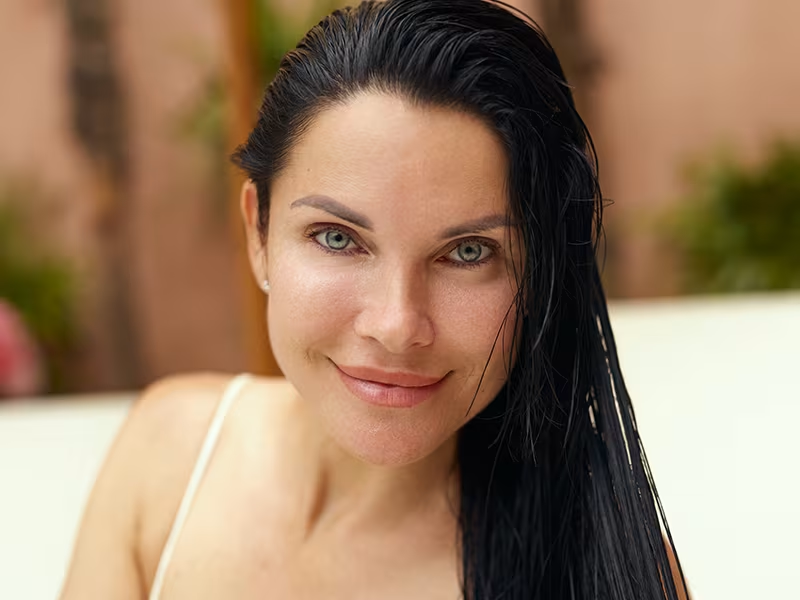
PRP with Microneedling Recovery
Immediately after treatment, your skin will look flushed and feel warm and tight, similar to a moderate sunburn. Mild swelling and pinpoint bleeding are both expected and both resolve quickly. Redness is generally most noticeable during the first day or two and settles over roughly two to three days for most patients, though this varies with treatment depth and individual skin.
As the surface heals, skin often becomes dry and may flake lightly around days three through five. This passes on its own and should not be exfoliated or picked.
General guidance for the first several days includes:
- Leave the skin alone for the first several hours so the PRP can absorb, then keep it clean with gentle, non-active products
- Use only the post-treatment products your provider approves, and hold off on retinoids, acids, and scrubs until you are told otherwise
- Skip makeup for the first day
- Avoid direct sun and apply sunscreen once your provider clears you to do so
- Wait about two days before strenuous exercise, saunas, hot tubs, and hot showers, since heat can prolong redness and swelling
- Do not pick, scratch, or exfoliate treated skin
Most patients return to work and normal activity within a day or two.
Results and Treatment Series
PRP with microneedling produces results that accumulate. Early improvements in texture and brightness typically become noticeable somewhere in the range of two to four weeks after a session, as the first round of new collagen forms. Continued remodeling means the skin generally keeps improving over the following months.
A single session provides some benefit, though most patients are advised to plan on a series. Common recommendations run from about three to six sessions spaced roughly four to six weeks apart, depending on your concerns and how your skin responds. Acne scarring and more advanced sun damage usually call for the higher end of that range, while fine lines and general dullness often improve with fewer.
Results are not permanent, because the skin continues to age after treatment. Many patients maintain their improvement with periodic sessions once or twice a year. Your provider will map out a plan at your consultation and adjust it as your skin changes.
Is PRP with Microneedling Safe?
PRP with microneedling has a well-established safety profile when performed by trained providers who follow proper protocols. Because the plasma comes from your own blood, there is no risk of an allergic reaction to the material itself.
Our staff follows strict infection control practices at every stage, including sterile needles and blood collection supplies, appropriate protective equipment, disinfection of all treatment surfaces, and preparation of the plasma according to manufacturer instructions.
Expected effects after treatment include redness, warmth, tightness, mild swelling, and pinpoint bleeding, all of which are part of normal healing. Less common risks include infection, prolonged redness, changes in pigmentation, and, in patients predisposed to it, scarring. Contact our office if redness or swelling persists beyond several days or if you develop signs of infection.
Why choose Aesthetic Surgery Center
Dr. Anurag Agarwal, M.D., F.A.C.S.
- Double board-certified facial plastic surgeon by the American Board of Facial Plastic and Reconstructive Surgery and the American Board of Otolaryngology – Head and Neck Surgery.
- Oral examiner and Board of Directors for the American Board of Facial Plastic and Reconstructive Surgery
- Former President of the Florida Society of Facial Plastic and Reconstructive Surgery
- Received his Doctor of Medicine at Philadelphia’s MCP-Hahnemann School of Medicine in 1999 and was elected to the Alpha Omega Alpha Honor Society.
- In 2016, Dr. Agarwal was honored at the annual American Academy of Facial Plastic and Reconstructive Surgery national meeting.
- Board-certified plastic surgeon by the American Board of Plastic Surgery.
- Attended medical school at UNMC (University of Nebraska Medical College).
- Was elected to the Alpha Omega Alpha Honor Society.
- Member of The Aesthetic Society, the Florida Medical Association, and Collier County Medical Society.
- General surgery residency at Loyola University Medical Center in Maywood, IL
- Plastic surgery residency at Cleveland Clinic Florida