
Are you considering facial rejuvenation but concerned about the longer incisions and recovery that may accompany a traditional facelift? An endoscopic approach uses a small camera and strategically placed incisions to help reposition underlying facial tissues. For appropriately selected patients, potential benefits of an endoscopic facelift may include less visible scarring, a targeted surgical approach, and a shorter initial recovery.
This technique may be worth discussing if you are noticing localized or early-to-moderate signs of facial aging, such as descended cheek tissues or reduced facial definition. The most appropriate approach will depend on your anatomy, the areas you want to address, your overall health, and the degree of correction needed.

Key Takeaways
- Endoscopic facelift techniques use small incisions and a camera to help reposition underlying facial tissues.
- Potential benefits may include less visible scarring and a shorter initial recovery than more extensive facelift surgery.
- Treatment areas, recovery, and results vary according to the technique, surgical plan, and individual patient.
- These procedures may be appropriate for selected patients with targeted or early-to-moderate signs of facial aging.
- Significant excess skin, advanced jowling, or neck laxity may require a different or more comprehensive surgical approach.
What Is an Endoscopic Facelift and How Does It Work?
An endoscopic facelift refers to facial-lifting techniques that use a small camera, called an endoscope, and strategically placed incisions to access and reposition underlying facial tissues. The specific areas treated depend on the surgical technique. For example, an endoscopic midface lift focuses primarily on the cheeks and central face, while significant jowling, excess skin, or neck laxity may require a different or additional facelift procedure.
Compared with more extensive facelift surgery, an endoscopic approach may offer smaller incisions, less visible scarring, and a shorter initial recovery for appropriately selected patients. However, it is not suitable for every pattern of facial aging, and the recommended approach should be based on the patient’s anatomy and treatment goals.
Key Benefits of Endoscopic Facelift vs Traditional Facelift
The potential benefits of an endoscopic facelift depend on the specific technique, the areas treated, and the individual patient. Compared with more extensive facelift surgery, a targeted endoscopic approach may offer smaller incisions, precise tissue repositioning, and a shorter initial recovery for appropriately selected patients.
Smaller, Strategically Placed Incisions
Endoscopic facelift techniques generally use smaller incisions positioned according to the treatment area and surgical plan. This may make scars less noticeable, although incision placement and healing vary by patient and procedure.
Potentially Shorter Initial Recovery
A targeted endoscopic procedure may involve less extensive tissue disruption than some traditional facelift operations. As a result, selected patients may experience less swelling or bruising and return to routine activities sooner, although recovery varies.
Lower Risk of Complications
Endoscopic techniques can target selected facial tissues rather than every area of facial aging. However, smaller incisions do not eliminate surgical risk. Potential complications include bleeding, infection, changes in sensation, nerve injury, asymmetry, scarring, prolonged swelling, and possible revision.
Appropriate for Selected Aging Concerns
An endoscopic approach may be considered for selected patients with localized or early-to-moderate facial tissue descent. Candidacy depends on facial anatomy, skin quality, overall health, and treatment goals rather than age alone.
Precise Tissue Repositioning
The endoscope helps the surgeon view underlying facial structures while repositioning selected tissues. The goal is to improve facial contours while preserving natural movement, expression, and recognizable features. Results depend on the technique, anatomy, and healing response.
A peer-reviewed study on the long-term outcomes of endoscopic midface lifting found sustained objective improvement in midface position among the patients followed. These findings support the potential durability of tissue repositioning in that specific application, but they should not be generalized to every endoscopic facelift technique or patient.

Are You Ready For A Consultation?
You are about to take the first steps towards improving your appearance and enhancing your self-image by learning about contemporary plastic surgery.
What Areas Can an Endoscopic Facelift Treat?
An endoscopic facelift is not a single procedure that treats every area of facial aging. The areas addressed depend on the specific technique and surgical plan. Some endoscopic approaches focus on the upper face, while others reposition tissues in the cheeks and central face.
For example, the American Society of Plastic Surgeons explains that a mid-facelift specifically targets the cheeks and area beneath the eyes, rather than changing the entire face.
Significant excess skin, advanced jowling, or pronounced neck laxity may require a lower-face lift, neck lift, or a more comprehensive facelift technique. The most appropriate approach depends on the location and degree of facial aging, as well as the patient’s anatomy and goals.
Limitations of an Endoscopic Facelift
An endoscopic facelift is not appropriate for every pattern or degree of facial aging. Although the technique generally uses smaller incisions, this does not guarantee a shorter or easier recovery. Results depend on the treatment area, the extent of surgery, the patient’s anatomy, and the specific technique performed.
A targeted endoscopic approach may have limitations, including:
- It may not remove substantial excess skin.
- It may not adequately correct advanced jowling or significant neck laxity.
- Recovery can still involve swelling, bruising, tightness, or numbness.
- Repositioning descended tissues does not necessarily replace facial volume lost with age.
- Another procedure or a combination of treatments may be needed to address multiple areas.
A peer-reviewed review of current facelift and neck-lift techniques notes that more comprehensive procedures remain important for treating advanced aging of the lower face, jawline, and neck. This reinforces the need to match the surgical approach to each patient’s anatomy and goals.
Who Is a Good Candidate for an Endoscopic Facelift?
Candidacy depends more on facial anatomy, the location of tissue descent, and the degree of correction needed than on age alone. An endoscopic approach may be considered for selected patients who:
- Have localized or early-to-moderate facial tissue descent.
- Have suitable skin quality and elasticity.
- Want targeted, relatively subtle improvement.
- Are in good overall health.
- Do not smoke or can stop as directed before and after surgery.
- Have realistic expectations about the procedure’s benefits and limitations.
For an endoscopic midface lift specifically, the surgeon may evaluate cheek descent, the transition between the lower eyelids and cheeks, facial volume, and whether lower-face or neck concerns require an additional procedure.
An in-person consultation is necessary to determine whether an endoscopic technique or a more comprehensive facelift approach is appropriate.
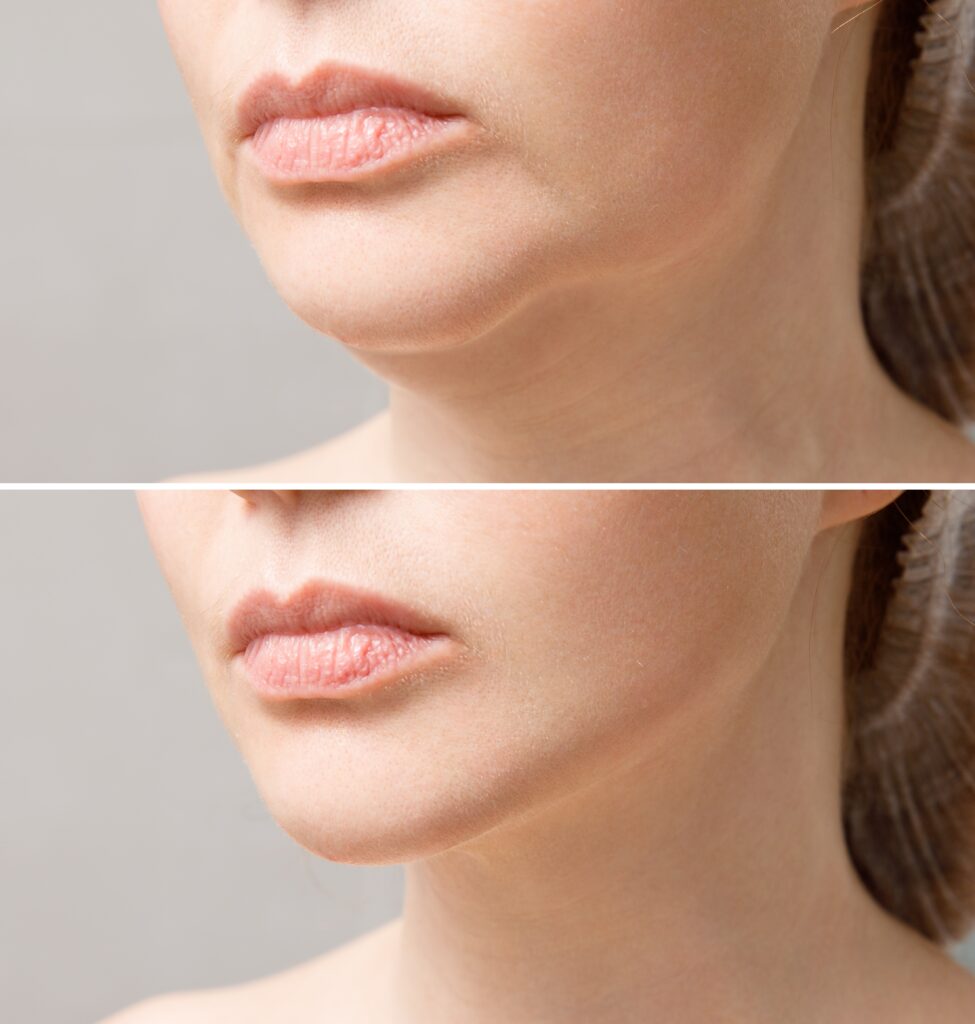
Endoscopic Facelift Before & After Photos
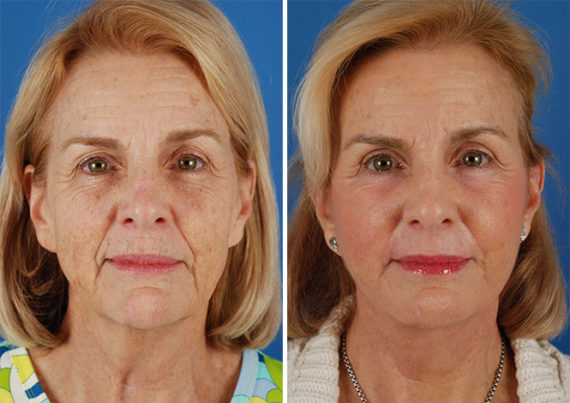
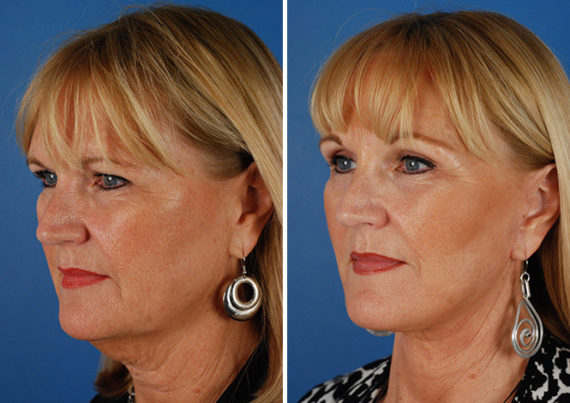
* Each patient is unique and individual results may vary.
Choosing a Facelift Specialist Matters
Facelift surgery, especially using advanced techniques such as the endoscopic approach, requires exceptional skill, precision, and a deep understanding of facial anatomy. Choosing a qualified facial plastic surgeon with relevant experience is an important part of understanding the procedure, its limitations, potential risks, and expected outcomes.
At the Aesthetic Surgery Center in Naples, our goal is to help patients feel like a refreshed version of themselves while prioritizing safety and long-term results. Ready to take the next step? Call us at 239-420-9100 or visit our contact page to schedule your personalized consultation today.
Frequently Asked Questions About Endoscopic Facelift Benefits
Results may remain visible for several years, although longevity varies according to the technique, facial anatomy, skin quality, lifestyle, and the natural aging process. An endoscopic facelift does not stop aging, and no specific duration can be guaranteed.
Discomfort varies by patient and procedure. Temporary tightness, tenderness, swelling, or numbness may occur during recovery, and the surgeon will provide an individualized pain-management plan. The intensity and duration of discomfort depend on the technique, extent of surgery, and individual healing response.
An endoscopic facelift may be considered for selected patients with localized or early-to-moderate facial tissue descent, suitable skin quality, good overall health, and realistic expectations. Candidacy depends on the areas being treated and the degree of correction required rather than age alone.
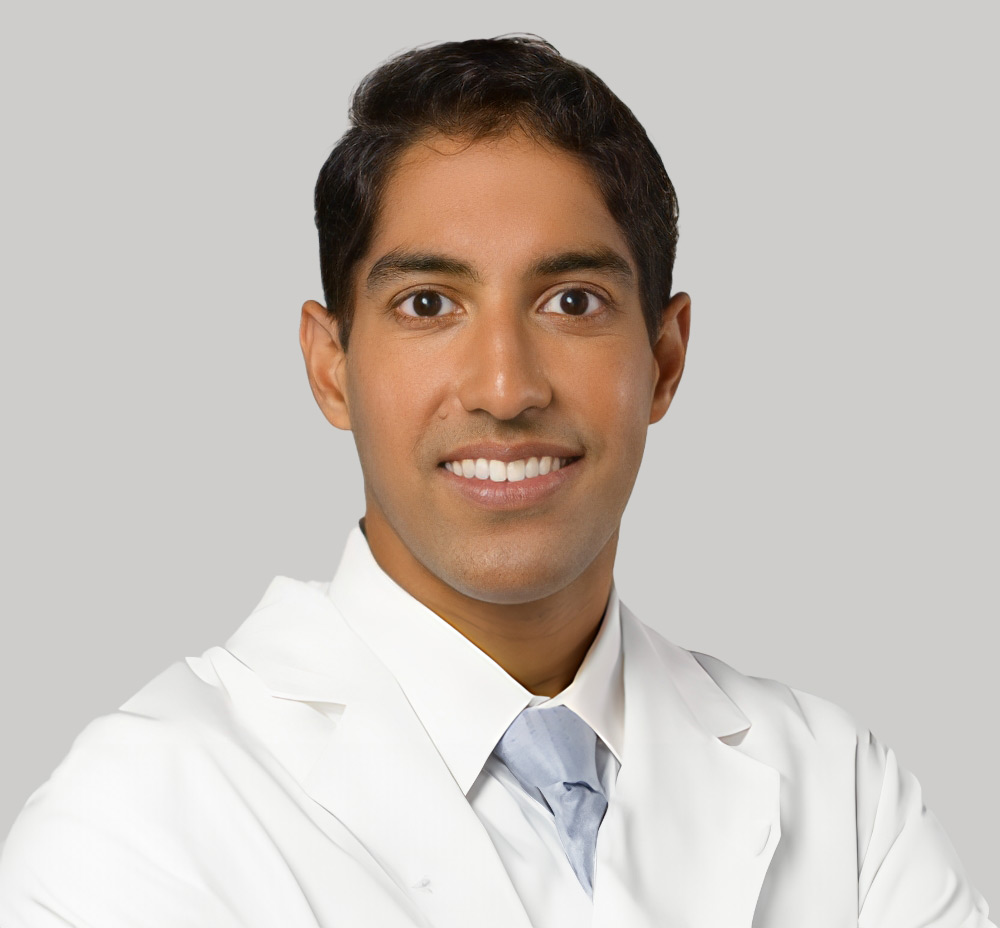
About the Author
Dr. Anurag Agarwal is a double board-certified facial plastic surgeon and the medical director of Aesthetic Surgery Center in Naples, FL. Certified by the American Board of Facial Plastic and Reconstructive Surgery and the American Board of Otolaryngology, Head and Neck Surgery, he is a Fellow of the American College of Surgeons, serves on the Board of Directors of the ABFPRS, and is a past president of the Florida Society of Facial Plastic and Reconstructive Surgery. He developed the Uplift™ lower face and neck lift and has been named a Castle Connolly Top Doctor every year since 2015, as well as Best Plastic Surgeon in the Naples Daily News Community’s Choice Awards in 2024 and 2025.