
If you are a man weighing a facelift, you are far from alone. In my practice in Naples, the number of men asking about facial rejuvenation has grown steadily over the past decade, and most arrive with a similar goal. They want to look as rested and capable as they feel, without looking like they had anything done. A facelift can accomplish that, but the planning and technique behind a man’s result differ in real ways from a woman’s.
I am Dr. Anurag Agarwal, a double board-certified facial plastic surgeon and the medical director of Aesthetic Surgery Center in Naples, FL. I developed the Uplift™ lower face and neck lift, a deep plane technique I perform for both men and women, and I have spent my career focused exclusively on the face.
What Men Should Know Before a Facelift
- A facelift for men restores the jawline and neck while keeping your features recognizably masculine.
- Male skin tends to be thicker and more vascular, which shapes how the surgery is planned and performed.
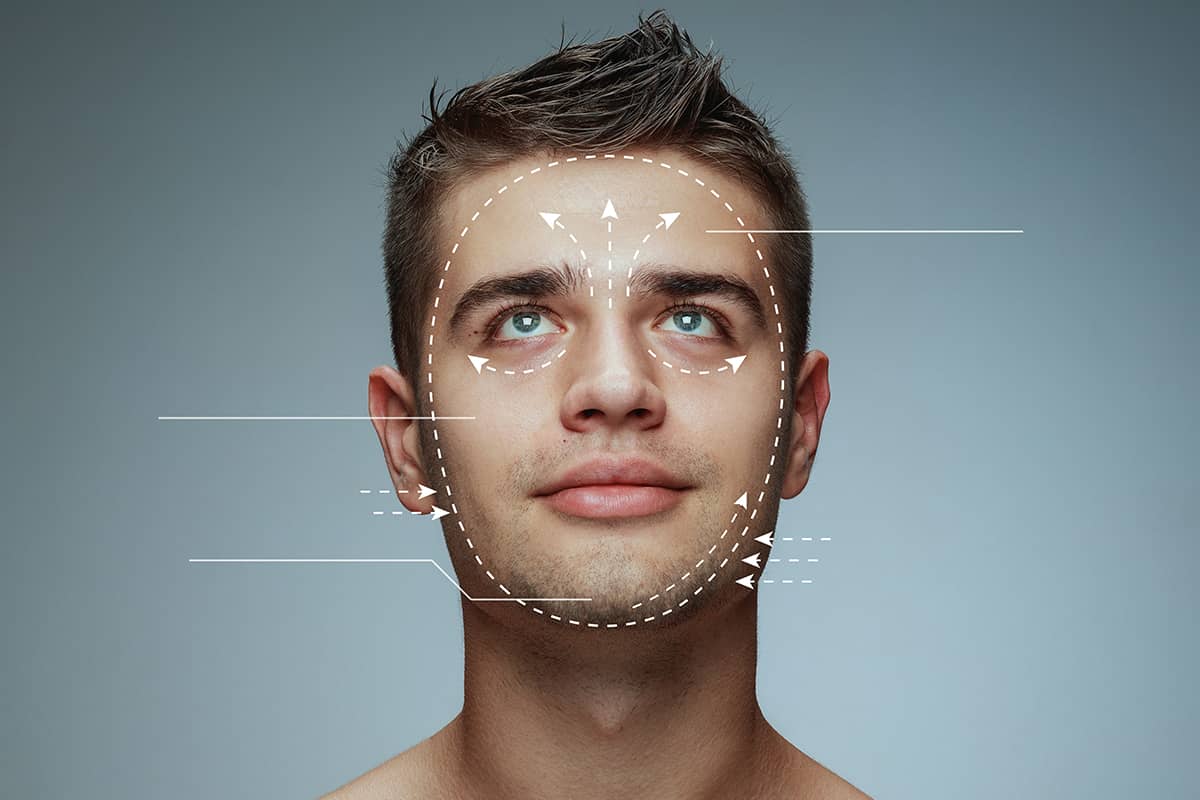
- The Uplift™ is a deep plane facelift that lifts the muscle layer vertically for a natural, untightened look, releasing facial attachments that tether the face so that the facial tissues can glide upwards.
- Most men return to their normal routine within about two weeks, with the last of the swelling settling over a few months.
- The best results come from a plan customized to your face, focused only on the areas that need lifting.
Why Men Choose Facelift Surgery
Men rarely tell me they simply want to look younger. More often they describe a mismatch: they feel energetic and engaged, yet the jowls, the folds beside the mouth, and the loose skin under the chin suggest someone tired or older than they are. For many men still active in their careers, that gap is worth addressing.
The neck is the most common starting point. A softening jawline and the loose skin some men call a turkey neck tend to show up earlier and bother them more than fine lines ever do. A well-planned facelift, often combined with a neck lift, restores a firmer jawline and a cleaner profile while leaving the rest of the face looking like itself.
What Makes a Male Facelift Different
Male facial anatomy changes the surgical plan in several practical ways. Men generally have thicker, oilier skin and a stronger, more squared bone structure, so the lift has to respect those proportions rather than soften them. Male tissue also carries a richer blood supply, which means I take extra care with technique during surgery.
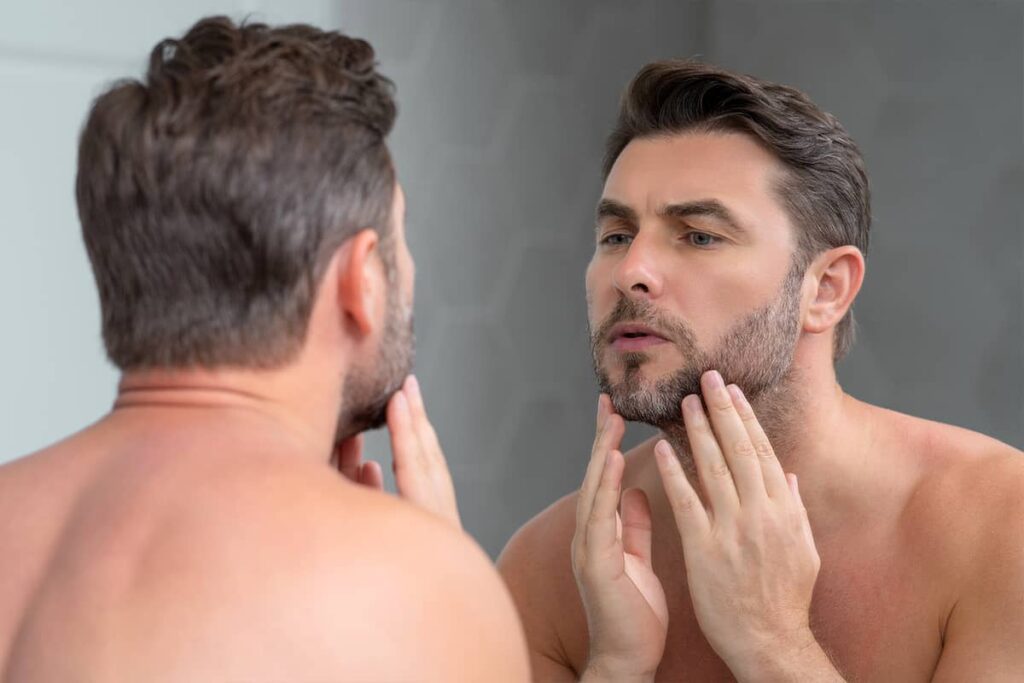
Facial hair is the other defining factor. Incisions have to be placed and angled so the beard and sideburn patterns still look natural afterward, and so hair-bearing skin is not pulled into or behind the ear. I hide the incisions in the sideburn, in creases in front of and behind the ear, and sometimes under the chin, planning each one around how a man’s hair actually grows. The aim throughout is masculine rejuvenation: a refreshed jawline and neck that read as a stronger version of the same face, never a feminized or overdone one.
What to Expect at Your Facelift Consultation

A male facelift consultation begins with a careful look at your facial structure, skin quality, and the areas that concern you most. I use a three-way mirror to demonstrate the changes we are considering and show you which areas we would address, such as the jawline, neck, and lower cheeks. We also review your medical history, current medications, and what recovery would realistically involve.
This is also where I steer the conversation away from labels. In my view there is no real procedure called a mini facelift. It is a vague term that means something different to every surgeon who uses it, so it is best dropped entirely. What matters is which layers of your face have descended and which areas actually need lifting. Not every man needs every part of the face addressed, so I build the plan around your anatomy and goals, sometimes alongside complementary procedures such as eyelid surgery or a brow lift.
How to Prepare for a Male Facelift
Preparation is mostly about reducing risk and setting up a smooth recovery. In the weeks beforehand, I review your medications and supplements and ask you to pause anything that can increase bleeding. If you smoke, stopping well ahead of surgery makes a meaningful difference to blood flow and healing, and it helps to limit alcohol beforehand.
A few practical steps help too. Arrange for someone to stay with you for the first couple of days, and handle work commitments in advance. Although I prefer patients to be clean shaven so that I can easily view the facial structures and skin contours, allowing the beard to grow post-operatively for a few weeks is an easy, natural way to camouflage any early bruising while the skin settles.

Are You Ready For A Consultation?
You are about to take the first steps towards improving your appearance and enhancing your self-image by learning about contemporary plastic surgery.
What Happens During Facelift Surgery
I perform the Uplift™ facelift under deep intravenous sedation, the lightest form of general anesthesia, at our AAAASF-accredited surgical facility in Naples. No inhalation gases or paralytic agents are used, and patients are monitored closely throughout, which keeps post-anesthesia recovery shorter and more comfortable.
The procedure works in the deep plane. Rather than pulling on the skin, I release the attachments that hold the muscle layer to the structures beneath it, which lets that layer glide upward without tension and carry the overlying skin and facial fat pads with it. That vertical direction of lift and lack of tension is what produces a natural result and avoids the swept-back look people associate with older techniques. Most male facelift procedures take about three to four hours, depending on whether the surgery involves a revision, submandibular gland reduction, or muscle work in the neck.
What Facelift Recovery Looks Like for Men
The First Days
Thin drains are typically in place for 2 days to limit swelling, and they come out easily in the office. Pain is uncommon after facial surgery, though a tight sensation, mild numbness, and some swelling are normal. Most men are walking comfortably within three to four days and can drive again around two days out, once they are off any prescription pain medicine.
The First Two Weeks
The bulk of the visible recovery happens here. Roughly three-quarters of the swelling resolves within the first two to two and a half weeks, and a beard can hide much of the bruising in the meantime. Sutures come out about one to two weeks after surgery, and many are dissolvable. By the end of 2 weeks, most men feel ready to ease back into running and light weight training.
Week 3 and Beyond
The remaining swelling settles gradually over about 3 months as the tissues relax into position. You can return to a full golf swing around three weeks and swim for about 4 weeks out. The incisions look slightly pink at first, then fade over a few months into fine, pale lines that are hard to see except on close inspection.
When Can Men Return to Work After a Facelift?
Most men are presentable enough to return to work in about two weeks, and those in less public-facing roles often feel comfortable a few days sooner. A beard helps conceal any lingering bruising in the meantime. Patients traveling to Naples for surgery should plan to stay in the area for at least ten days, and preferably two weeks, before flying home.
How Natural Can a Male Facelift Look?
A facelift should make you look rested, not operated on. Because the Uplift™ lifts the deep tissues vertically and preserves the skin’s natural attachments to the muscle, it avoids the tight, pulled look that gives surgery away and keeps your masculine landmarks intact.
The most natural outcomes come from lifting only the areas that genuinely need it.
Are You a Candidate for a Male Facelift Surgery?
Good candidates are generally men over 40 in good overall health, with enough laxity along the jawline and neck to benefit from surgery and realistic expectations about the results. There is no strict upper age limit, and many men in their 60s and 70s do very well. Having the procedure earlier tends to give longer-lasting results, since the skin and deeper layers are more robust. A personal evaluation is the only reliable way to know whether surgery is right for you.
Schedule a Facelift Consultation in Naples, FL
If you are considering a facelift, the most useful next step is a personal consultation where we can look at your anatomy and talk through your options. Call Aesthetic Surgery Center in Naples, FL at 239-594-9100 to schedule your visit.
Frequently Asked Questions About Facelift Surgery for Men
There is no single right age. Most men are candidates from their 40s onward, once there is enough laxity along the jawline and neck to justify surgery. Health matters more than age, and many men in their 60s and 70s do very well.
Plan on about 2 weeks for the most visible recovery, when the majority of swelling and bruising resolve and most men return to work and light activity. The final refinements settle gradually over roughly three months.
Hold off on shaving over or near the incisions until they have healed and I have cleared you, usually within the first couple of weeks. You can groom the rest of your face gently in the meantime, taking care around the ears and sideburns where the incisions sit.
No. The goal is to refresh the jawline and neck while preserving the features that make your face yours. A properly planned lift respects masculine proportions, so you look rested and natural rather than altered.
A facelift restores the lower face and neck, but it does not soften surface wrinkles or even out skin tone. To address those signs of aging, many men add complementary treatments such as skin resurfacing or dermal fillers. Procedures like eyelid surgery or a brow lift refresh the upper face for fuller facial rejuvenation, while preserving masculine features. Some men have such deep nasolabial folds that I will perform direct excision of nasolabial folds to soften those, beyond what can be accomplished by the Uplift™ alone. I match each treatment to your aesthetic goals so the results look balanced and your appearance stays natural.
About the Author
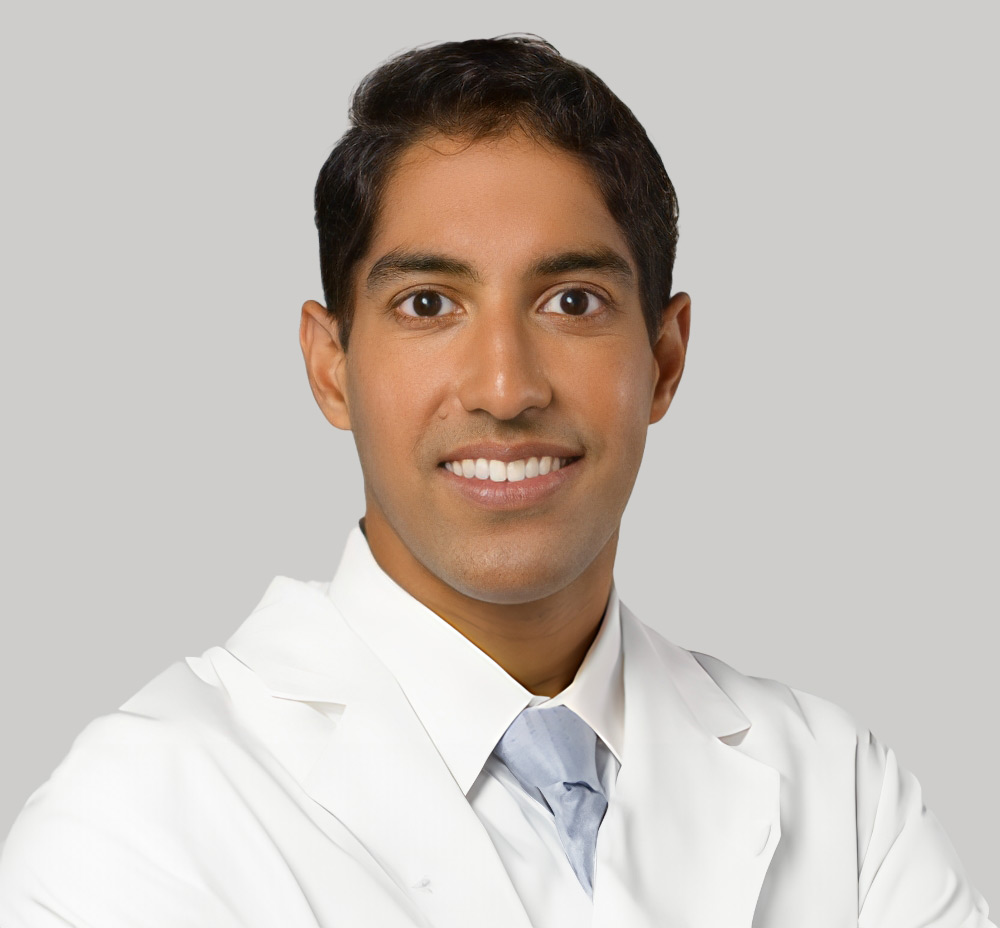
Dr. Anurag Agarwal is a double board-certified facial plastic surgeon and the medical director of Aesthetic Surgery Center in Naples, FL. Certified by the American Board of Facial Plastic and Reconstructive Surgery and the American Board of Otolaryngology, Head and Neck Surgery, he is a Fellow of the American College of Surgeons, serves on the Board of Directors of the ABFPRS, and is a past president of the Florida Society of Facial Plastic and Reconstructive Surgery. He developed the Uplift™ lower face and neck lift and has been named a Castle Connolly Top Doctor every year since 2015, as well as Best Plastic Surgeon in the Naples Daily News Community’s Choice Awards in 2024 and 2025.