

Benefits and Beauty Through Blepharoplasty
Unlock a rejuvenated look with eyelid surgery. Discover the transformative benefits of this procedure, from alleviating medical conditions to enhancing your facial appearance, all while maintaining a natural look.
Our Achievements








Blepharoplasty Explained
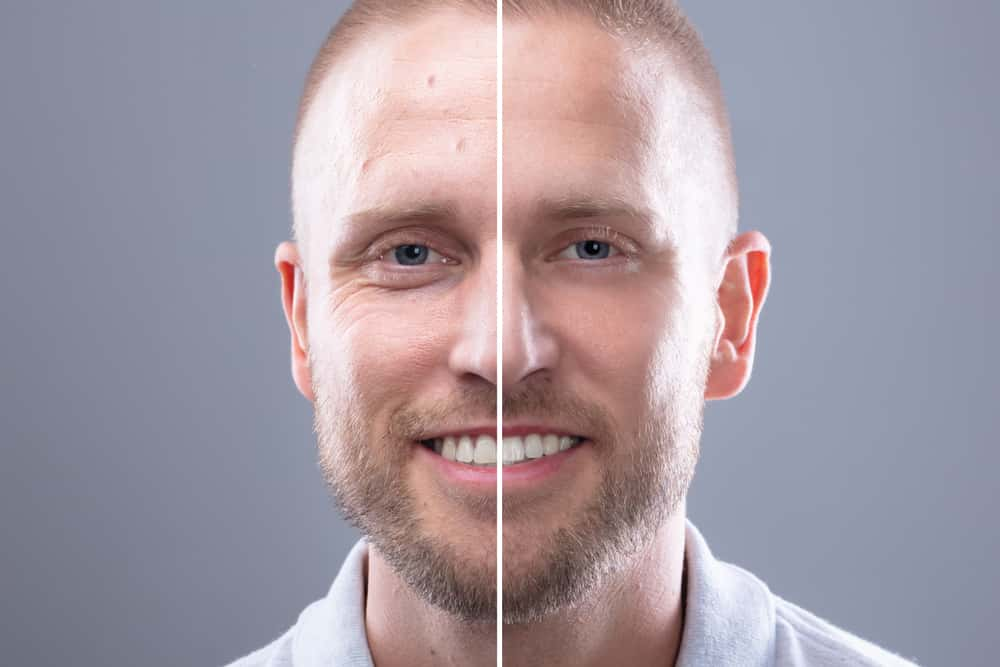
Blepharoplasty, also known as cosmetic eyelid surgery, is a popular rejuvenation procedure. Tightening the eyelid skin brightens the eye area and improves the patient’s facial aesthetics, while proper incision placement helps reduce scarring after eyelid surgery. This is a common procedure for people who are experiencing early signs of aging.
-

- L.C.


4.8(52)

5(82)

4.9(72)

4.9(57)
Your Naples Blepharoplasty Consultation
During your consultation, our team will review all steps in the procedure with you. This includes the type of surgery needed, incision placement, goals, risks, alternatives, potential complications, eyelid surgery recovery tips, and recovery time.
You will then receive the eyelid surgery cost estimate and be able to view our patient before-and-after photos. We encourage you to review your options at an initial consultation with one of our plastic surgeons. A customized plan will be made for you as each individual has different aesthetic goals and health considerations, particularly for men seeking male blepharoplasty, where the approach may vary slightly to enhance masculine features while ensuring natural results.
What is a blepharoplasty?
Awake upper eyelid surgery (blepharoplasty)
CALL TODAY TO SCHEDULE YOUR CONSULTATION
Blepharoplasty Different Techniques
There are different types of techniques and approaches to blepharoplasty, depending on the patient’s needs. Here at Aesthetic Surgery Center, our surgical team can address the upper eyelids, the lower lids, or both if needed. We also offer non-surgical treatments. Although blepharoplasty can refer to surgery on either the upper or lower lids, the surgical process for each is quite different.
Upper Blepharoplasty
Upper blepharoplasty is beneficial when the skin begins to sag and droop over the eyes. Sagging of the upper eyelids creates a hooded appearance and can obscure the youthful eyelid crease. The eyelids may also feel heavy due to excess fatty tissue and skin.
During an upper blepharoplasty, the surgeon removes excess tissue and contours the upper lids to resolve any cosmetic issues.
Lower Blepharoplasty
Lower blepharoplasty corrects bulging pouches beneath the eyes, often known as “eye bags”. As the skin thins over time, the fat pads beneath the eyes begin to protrude, causing a person to look chronically tired and older than they might feel.
Typically, the fat pads are either removed or repositioned. Sometimes fat transfer to the hollows under the eyes can treat tear trough deformities and restore volume to the eyelid/cheek junction where it becomes hollow.
Non-Surgical Eyelid Lift
A non-surgical eyelid lift usually refers to fat injections or laser resurfacing for wrinkle improvement, or a combination of both. Sometimes, Botox injections can be used to adjust eyebrow position, which in turn may alleviate upper eyelid heaviness.

Blepharoplasty Before & After Photos
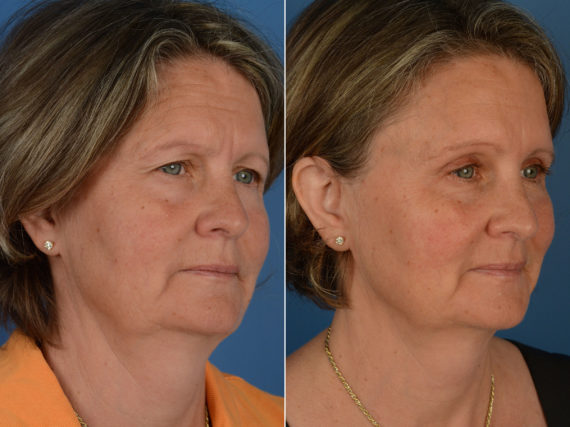
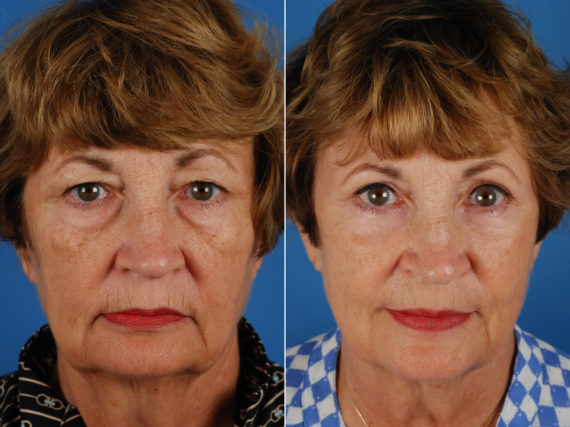
* Each patient is unique and individual results may vary.
Blepharoplasty Procedure
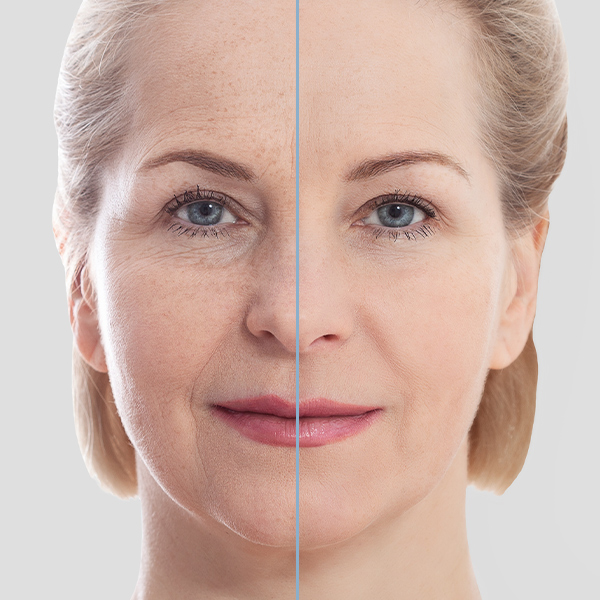
The upper blepharoplasty procedure is performed under local anesthesia with or without sedation. Prior to the procedure, patients should schedule an eyelid surgery consultation with one of our professionals to discuss desired upper eyelid surgery creases, goals, risks, recovery time, and more. During the surgery, small incisions in the natural creases of the eyelids are made, and excess skin, fat, and muscle are carefully removed as needed. The remaining tissue is then re-contoured to create a more youthful appearance.
Lower eyelid blepharoplasty is almost always performed with intravenous sedation in our operating room. Sometimes incisions are made inside the lower eyelid and less frequently, from outside the lower eyelid below the lash line.
In some cases, laser resurfacing may be used to reduce wrinkles around the eyes. The laser treatment helps improve the texture and tone of the skin in order to create a smoother, fresher look. After surgery, patients can expect swelling and bruising, the majority of which usually resolves within two weeks. It is important to follow your doctor’s instructions for post-operative care in order to ensure optimal results.
Blepharoplasty Recovery
Blepharoplasty patients in Naples, FL, can expect some swelling and bruising in the days following their surgery. Our plastic surgeons will monitor these symptoms and adjust the treatment plan if needed. If droopy eyelids are an issue, vision may be temporarily affected; however, this typically resolves quickly with no long-term effects on the field of vision. Patients who undergo blepharoplasty for cosmetic reasons may return to work or social activities after about a week.
Blepharoplasty Cost in Naples, Florida
The average cost of eyelid surgery in Florida is $3500 to $12,000 (depending on whether upper and/or lower eyelid surgery is being performed, if laser resurfacing is needed, if ptosis repair is warranted, and whether fat transfer is indicated). Blepharoplasty is one of the most popular cosmetic procedures, as it can produce amazing results with minimal downtime.
Related Procedures: Rhinoplasty, Revision Rhinoplasty, The UpLift Facelift, Endoscopic Mid Facelift Surgery, Eyelid Surgery, Eyebrow Transplant, Chin & Cheek Surgery, Skin Cancer Reconstruction, Hair Transplant Surgery, Surgery of the Ears, Fat Transfer (Fat Grafting), Lip Augmentation, Endoscopic Eyebrow Lift, Scar Revision
Why choose Aesthetic Surgery Center
Dr. Anurag Agarwal, M.D., F.A.C.S.
- Double board-certified facial plastic surgeon by the American Board of Facial Plastic and Reconstructive Surgery and the American Board of Otolaryngology – Head and Neck Surgery.
- Oral examiner and Board of Directors for the American Board of Facial Plastic and Reconstructive Surgery
- Former President of the Florida Society of Facial Plastic and Reconstructive Surgery
- Received his Doctor of Medicine at Philadelphia’s MCP-Hahnemann School of Medicine in 1999 and was elected to the Alpha Omega Alpha Honor Society.
- In 2016, Dr. Agarwal was honored at the annual American Academy of Facial Plastic and Reconstructive Surgery national meeting.
- Board-certified plastic surgeon by the American Board of Plastic Surgery.
- Attended medical school at UNMC (University of Nebraska Medical College).
- Was elected to the Alpha Omega Alpha Honor Society.
- Member of The Aesthetic Society, the Florida Medical Association, and Collier County Medical Society.
- General surgery residency at Loyola University Medical Center in Maywood, IL
- Plastic surgery residency at Cleveland Clinic Florida